Re: British Nuclear Testing in Australia
For the location and a brief history of the Montebello Islands off the coast of Western Australia, including the: (a) 1622 wreck of the British East India Company ship, the Tryall; (b) the largest explosion in Australia; and (c) flourishing wildlife; see:
http://en.wikipedia.org/wiki/Montebel...
Announcement
Collapse
No announcement yet.
British Nuclear Testing in Australia
Collapse
X
-
-
Re: British Nuclear Testing in Australia
I have covered Maralinga in quite a lot of detail..here will be 3 video's of the British tests at Monte Bellow.
Published on Jan 27, 2014
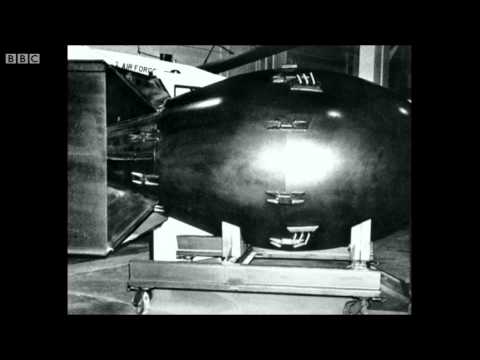
Atomic Bomb Explosion Test Footage - British scientists had been heavily involved in the US wartime Manhattan Project to develop a nuclear weapon. After the war, the United States, keen to maintain its monopoly of A-bomb weaponry and concerned about intelligence leaks, ended all nuclear co-operation with the British. As a consequence the Labour government authorised the development of a British bomb using the scientists that had been involved in the wartime research.
One aim of building a British bomb was to maintain the United Kingdom's influence in the world: a world in which the United States had the only such arsenal and the Soviet Union controlled most of Eastern Europe with the continent's largest army.
The explosion of the first Soviet bomb in 1949 seemed to justify the decision by the British to develop such a weapon. Three years later, the British detonated their first bomb in 'Operation Hurricane' on the Australian island of Trimoulle, part of the Monte Bello island group.
The warhead, exploded from the old British frigate HMS Plym, used British and Canadian plutonium. This was later developed into the 'Blue Danube' weapon carried on the active British nuclear force of RAF 'V-bombers'.
The decision to use the Monte Bellos as a test site, the treatment of aborigines in the area and compensation for those involved in the tests was explored by an Australian Royal Commission in 1986 [these records can be found in AB 40 in The National Archives' catalogue].
This film highlights the technological achievements of the group of British and émigré scientists involved.
This film made available courtesy the UK National Archives. .
CharlieDeanArchives - Archive footage from the 20th century making history come alive!
Leave a comment:
-
Re: British Nuclear Testing in Australia
Sixty years on, the Maralinga bomb tests remind us not to put security over safety
It is September 27, 1956. At a dusty site called One Tree, in the northern reaches of the 3,200-square-kilometre Maralinga atomic weapons test range in outback South Australia, the winds have finally died down and the countdown begins.
The site has been on alert for more than two weeks, but the weather has constantly interfered with the plans. Finally, Professor Sir William Penney, head of the UK Atomic Weapons Research Establishment, can wait no longer. He gives the final, definitive go-ahead
The military personnel, scientists, technicians and media – as well as the “indoctrinee force” of officers positioned close to the blast zone and required to report back on the effects of an atomic bomb up close – tense in readiness.
And so, at 5pm, Operation Buffalo begins. The 15-kilotonne atomic device, the same explosive strength as the weapon dropped on Hiroshima 11 years earlier (although totally different in design), is bolted to a 30-metre steel tower. The device is a plutonium warhead that will test Britain’s “Red Beard” tactical nuclear weapon.
The count reaches its finale – three… two… one… FLASH! – and all present turn their backs. When given the order to turn back again, they see an awesome, rising fireball. Then Maralinga’s first mushroom cloud begins to bloom over the plain – by October the following year, there will have been six more.
RAF and RAAF aircraft prepare to fly through the billowing cloud to gather samples. The cloud rises much higher than predicted and, despite the delay, the winds are still unsuitable for atmospheric nuclear testing. The radioactive cloud heads due east, towards populated areas on Australia’s east coast.
Power struggle
So began the most damaging chapter in the history of British nuclear weapons testing in Australia. The UK had carried out atomic tests in 1952 and 1956 at the Monte Bello Islands off Western Australia, and in 1953 at Emu Field north of Maralinga.
The British had requested and were granted a huge chunk of South Australia to create a “permanent” atomic weapons test site, after finding the conditions at Monte Bello and Emu Field too remote and unworkable. Australia’s then prime minister, Robert Menzies, was all too happy to oblige. Back in September 1950 in a phone call with his British counterpart, Clement Attlee, he had said yes to nuclear testing without even referring the issue to his cabinet.
THE BIG PICTURE Security was tight at Maralinga but it did not prevent health problems for those who witnessed the tests.
Menzies was not entirely blinded by his well-known anglophilia; he also saw advantages for Australia in granting Britain’s request. He was seeking assurances of security in a post-Hiroshima, nuclear-armed world and he believed that working with the UK would provide guarantees of at least British protection, and probably US protection as well.
He was also exploring ways to power civilian Australia with atomic energy and – whisper it – even to buy an atomic bomb with an Australian flag on it (for more background, see here). While Australia had not been involved in developing either atomic weaponry or nuclear energy, she wanted in now. Menzies’ ambitions were such that he authorised offering more to the British than they requested.
Atomic Thunder: The Maralinga Story, by Elizabeth Tynan.
While Australia was preparing to sign the Maralinga agreement, the supply minister, Howard Beale, wrote in a top-secret 1954 cabinet document:
Although [the] UK had intimated that she was prepared to meet the full costs, Australia proposed that the principles of apportioning the expenses of the trial should be agreed whereby the cost of Australian personnel engaged on the preparation of the site, and of materials and equipment which could be recovered after the tests, should fall to Australia’s account.
Menzies was not entirely blinded by his well-known anglophilia; he also saw advantages for Australia in granting Britain’s request. He was seeking assurances of security in a post-Hiroshima, nuclear-armed world and he believed that working with the UK would provide guarantees of at least British protection, and probably US protection as well.
He was also exploring ways to power civilian Australia with atomic energy and – whisper it – even to buy an atomic bomb with an Australian flag on it (for more background, see here). While Australia had not been involved in developing either atomic weaponry or nuclear energy, she wanted in now. Menzies’ ambitions were such that he authorised offering more to the British than they requested.
While Australia was preparing to sign the Maralinga agreement, the supply minister, Howard Beale, wrote in a top-secret 1954 cabinet document:
Although [the] UK had intimated that she was prepared to meet the full costs, Australia proposed that the principles of apportioning the expenses of the trial should be agreed whereby the cost of Australian personnel engaged on the preparation of the site, and of materials and equipment which could be recovered after the tests, should fall to Australia’s account.
A typical mushroom cloud rises over the atomic testing range at Maralinga in South Australia in 1956. Many Aboriginal people who lived near the site knew nothing of the tests or their dangers. Photo: The Argus
Beale said that he did not want Australia to be a mere “hewer of wood and drawer of water” for the British, but a respected partner of high (though maybe not equal) standing with access to the knowledge generated from the atomic tests.
That hope was forlorn and unrealised. Australia duly hewed the wood and drew the water at Maralinga, and stood by while Britain’s nuclear and military elite trashed a swathe of Australia’s landscape and then, in the mid-1960s, promptly left. Britain carried out a total of 12 major weapons tests in Australia: three at Monte Bello, two at Emu Field and seven at Maralinga. The British also conducted hundreds of so-called “minor trials”, including the highly damaging Vixen B radiological experiments, which scattered long-lived plutonium over a large area at Maralinga.
The British carried out two clean-up operations – Operation Hercules in 1964 and Operation Brumby in 1967 – both of which made the contamination problems worse.
Legacy of damage
The damage done to Indigenous people in the vicinity of all three test sites is immeasurable and included displacement, injury and death. Service personnel from several countries, but particularly Britain and Australia, also suffered – not least because of their continuing fight for the slightest recognition of the dangers they faced. Many of the injuries and deaths allegedly caused by the British tests have not been formally linked to the operation, a source of ongoing distress for those involved.
The cost of the clean-up exceeded A$100 million in the late 1990s. Britain paid less than half, and only after protracted pressure and negotiations.
Decades later, we still don’t know the full extent of the effects suffered by service personnel and local communities. Despite years of legal wrangling, those communities' suffering has never been properly recognised or compensated.
Why did Australia allow it to happen? The answer is that Britain asserted its nuclear colonialism just as an anglophile prime minister took power in Australia, and after the United States made nuclear weapons research collaboration with other nations illegal, barring further joint weapons development with the UK.
Menzies’ political agenda emphasised national security and tapped into Cold War fears. While acting in what he thought were Australia’s interests (as well as allegiance to the mother country), he displayed a reckless disregard for the risks of letting loose huge quantities of radioactive material without adequate safeguards.
Six decades later, those atomic weapons tests still cast their shadow across Australia’s landscape. They stand as testament to the dangers of government decisions made without close scrutiny, and as a reminder – at a time when leaders are once again preoccupied with international security – not to let it happen again.
Liz Tynan will launch her book, Atomic Thunder: The Maralinga Story, on September 27. A travelling art exhibition, Black Mist Burnt Country, featuring art from the Maralinga lands, will open on the same day.
Liz Tynan, Senior Lecturer and Co-ordinator Research Student Academic Support, James Cook University
This article was originally published on The Conversation. Read the original article.
http://www.canberratimes.com.au/comm...25-gro9wj.html
Leave a comment:
-
Re: British Nuclear Testing in Australia
The secret destruction of Australia’s Hiroshima
Emma Reynolds,news.com.au@emmareyn
Email a friend
WHEN nuclear explosions tore through Australia’s vast, arid centre, some people living there didn’t even know it was coming.
It devastated the country for miles around, annihilating every bird, tree and animal in its path.
Even today, the effects of our very own Hiroshima are still felt by the families it ripped apart, and those suffering horrific health problems as a result.
The British military detonated seven nuclear bombs in remote Maralinga, around 800km north-west of Adelaide, plus two at Emu Fields and three off the coast near Karratha, Western Australia.
They also staged hundreds of minor trials investigating the impact of non-nuclear explosions on atomic weapons, involving tanks, gun, mannequins in uniforms and even tethered goats. In many ways, these smaller tests were equally dangerous, spraying plutonium in all directions.
Yet most Australians know very little about the blasts that shattered communities, and the dramatic story now buried under layers of dust.
Archie Barton was just a child when the nuclear testing took place between 1956 and 1963, stretching across a huge now uninhabitable 120km of land where he and thousands of others lived.
“He was taken away from his mother,” his stepson Steve Harrison tells news.com.au. “He was part of the Stolen Generations. He grew up in homes around Australia, and led a very rough life.
“Before my mum, he was a full-blown alcoholic. He wanted to go back to his birthplace.
“With his brother, he fought a battle with the British government to come back to clean up the area.
“He came into my life at a very young age. I was 14. I knew him as a strong, proud Aboriginal black man. He ended up getting an OBE.”
Go to the link for balance of text and imagery. http://www.news.com.au/lifestyle/rea...a297c2a348a8e1
********************
This subject has been touched on many times over the years however I doubt if the Politicians ever take any interest in it; other than prior to elections when they make promises.......and then forget them.
Australians who were engaged in the tests are named as "PARTICIPANTS", to us the word "Veteran" is not the done thing, they may have to spend money on those who are left:angry:
In a few years time I expect they will all be upstanding {With Hands on Hearts} singing the praise of "The Last Man Standing' :shocked::unimpressed:
Leave a comment:
-
Re: British Nuclear Testing in Australia
Adelaide ponders value of nuclear waste dump
from "Nikkie"--ASIAN REVIEW. March 31, 2016 2:00 pm JST
. GEOFF HISCOCK, Contributing writer
SYDNEY -- South Australia's dark history as a nuclear test site more than half a century ago is coming to the fore again as its citizens ponder the value of becoming an international dump for high-level nuclear waste.
The state, which has the highest unemployment rate among Australia's six states and two territories, will decide by the end of this year if it wants to set up a nuclear waste storage facility in its arid and sparsely populated outback country -- a move that potentially could generate 257 billion Australian dollars of revenue over a 70-year period and create thousands of jobs.
Those opposing the dump include environmental organizations, traditional Aboriginal custodians of the land and the Australian Greens political party, with Greens Senator Robert Simms deriding the dump's economics as "pure fantasy."
South Australia's outback encompasses vast desert areas, salt-crusted dry lakes that occasionally fill with water after storms, and grasslands and low ranges dotted with mining sites. Entry to much of the area is restricted, either for defense reasons or because it is an Aboriginal reserve.
Australia has no nuclear power industry of its own, but is the world's second largest exporter of uranium -- behind Kazakhstan -- to nuclear power station operators in Japan, China, South Korea, Taiwan, Europe and the U.S.
To read the full article just go to the link............... http://asia.nikkei.com/Politics-Econ...ear-waste-dump
NOTE: The "Nikkie Review" also contains other interesting articles..........[check header at top of page]
Leave a comment:
-
Re: British Nuclear Testing in Australia
New generations of Australian families suffering deformities and early deaths because of ‘genetic transfer’
March 10, 20164:41pm
"News.cm.au"
EXCLUSIVE
PEOPLE who worked at Australian atomic bomb test sites claim they have produced generations of children with severe deformities and suffered a high number of stillbirths.
Documents obtained exclusively by news.com.au show hundreds of children and grandchildren of veterans exposed to radiation were born with shocking illnesses including tumours, Down syndrome, cleft palates, cerebral palsy, autism, missing bones and heart disease.
One veteran, who was posted to the Maralinga nuclear test site in South Australia in the 1950s as part of the British Nuclear Test (BNT) program, says the radiation contaminated his sperm and is to blame for the death of a child he never got to know.
But he is not alone, with the documents detailing a litany of miscarriages and stillbirths that has allegedly passed the devastation from generation to generation.
Australian ex-servicemen and their families originally made submissions to a Federal Government review in 2003 over deaths and disabilities they believe were caused by exposure to radiation from nuclear testing in South Australia and Western Australia in the 1950s and 60s.
The submissions were later compiled to use in a class action against the British Ministry of Defence, but the case was not allowed to proceed because it was deemed impossible to prove radiation caused their illnesses.
The Department of Veterans’ Affairs told news.com.au it had not received any reports about Australian descendants of BNT veterans who suffered deformities, abnormalities, illness or death as a result of suspected genetic transfers.
The documents provided to news.com.au reveal that about 100 of the soldiers’ descendants, born as recently as the 1990s, suffered health complications suspected by the families to have been caused by genetic transfers.
“Daughter Stephanie SEVERELY disabled — born with MISSING vertebrae and confined to wheelchair for her entire life,” one entry read.
“Daryl — deformities, back, extra bone, lower back missing bones, deformed jaw, undescended testicles,” another read.
“Birth deformities (neck fusion) ... no anus,” others said.
In many cases, siblings each suffered unique medical problems.
“Gregory — visual abnormalities; Graeme — reduplication of large bowel; Stephen — dental deformities,” one submission read.
Another submission revealed that “all three daughters (of one veteran suffered) numerous cases — ovarian tumours, lymphoma, breast cancer secondaries in bones, 14 inches (35cm) of bowel removed”.
Some of the veterans’ grandchildren were also affected, with reports of one young boy who lost his leg to cancer and another who was born with a cleft palate, according to the submissions.
Many of the descendants died early deaths.
“Son died aged 36 from non-Hodgkins Lymphoma,” one entry read.
“Wife delivered stillborn 1958, daughter Kay delivered stillborn September 2007,” another wrote.
“Son — terminal stomach cancer, dead at 47 years old, both daughters severe Endometriosis, hysterectomy, miscarriage,” another entry revealed.
“… daughter Maree died 24 hours after birth, cause unknown,” another said.
A great deal more of this article is available at the link below
http://www.news.com.au/lifestyle/hea...a00bc2fcbcbea4
Leave a comment:
-
Re: British Nuclear Testing in Australia
Hugh,Originally posted by Hugh View PostAnd then there's the problem of getting it there.
Hugh
Exactly right, protests will surely abound.....................the shipments wold have to arrive by sea..........................protests on the wharves about unloading/safety.............special wage allowances................and that is only to land it [hopefully safely].
Then we will have the logistical problem of moving the shipments vast distances to a "Safe" ??? containment facility.......protests along the way which will require large security escorts....................I just wonder how carefully this scheme has been studied..................or.........has the thought of mega $$$$$$'s clouded political judgement................as usual.
Gordon.
Leave a comment:
-
Re: British Nuclear Testing in Australia
And then there's the problem of getting it there.
Hugh
Leave a comment:
-
Re: British Nuclear Testing in Australia
I am fairly sure i have placed various individual links to some of the items on this post, however for ease of viewing the link below will give a broad coverage of many items/stories; it seems quite topical at the moment as there is considerable debate/discussion at the present time about the construction of a "Nuclear Waste Storage Facility" in South Australia; The question is................how safe is safe????, this effort forsees the waste being brouht in from around the world.
Why would the world accept Australia’s offer to store nuclear waste?
While acknowledging that nuclear electricity is not commercially viable in South Australia, the Royal Commission’s tentative findings give strong support to the extraordinary notion that the state should attempt to profit by storing high-level nuclear waste from countries that do have nuclear power.
The scheme envisages a combination of above-ground temporary storage in dry casks, together with storage in a permanent underground repository. In practice, almost all the imported waste would be stored initially in dry casks for several decades before being transferred to the proposed underground storage area, where they would have to be managed for hundreds of thousands of years.
http://theconversation.com/why-would...ar-waste-54742
Nuclear waste dump to meet 'global need' recommended for SA by royal commission
By Malcolm Sutton
Commissioner Kevin Scarce said there were 390,000 tonnes of high-level nuclear waste in worldwide inventories, and nearly 10 million cubic metres of intermediate-level waste — all of it produced from nuclear power generation.
He said SA could take 13 per cent of the world's waste.
"Nations have not been able to find a disposal solution that meets their geology," Mr Scarce said.
"National consensus is that deep geological storage is the right solution for spent fuel, kept isolated from the environment for hundreds of thousands of years."
http://www.abc.net.au/news/2016-02-1...mended/7167412
SA nuclear waste dump would deliver $257b
Job creation
About 1500 jobs would initially be created and this would rise to 4500 jobs during a construction period of 25 years. The $145 billion in costs included a $32 billion reserve fund to cover whole-of-life maintenance and eventual closure costs.
There are significant quantities of used fuel from nuclear reactors in temporary storage in the Asia-Pacific region and these quantities will grow, the report found.
But Mr Scarce said the timeframes were long. In Finland and Sweden, successful projects had taken more than 30 years to develop. "These are long-term projects," Mr Scarce said.
Read more: http://www.smh.com.au/business/energ...#ixzz40IbB0cv8
http://www.smh.com.au/business/energ...11-gmrcgx.html
Now of course all of the above links are purely "Political Propaganda"
Now to where the post actually started.............................. Various items/articles about testing plus the usual good videos............................One that is worth watching again is "Australia's Atomic Confessions"
They are all contained at the link below............................
Maralinga
http://australianmap.net/maralinga/?...23400878906250
Leave a comment:
-
Re: British Nuclear Testing in Australia
Originally posted by Alastair View PostHave you noticed this thread has had over 21,000 views? That's pretty damn good.
Alastair
Not too bad really, now climbing up towards 22,000 !!!!!!............... pity the participating governments pay little heed to it.................Many millions of $$$$$$ [or pounds] expended in financing these tests; millions more spent on Clean-Up, then more millions spent denying claims from veterans.........Whoops,sorry, must only call them "Participants".
Final result ????????????--------------- A totally useless item of weaponry that most of the world is against !!!!!!!
Gordon.
Leave a comment:
-
Re: British Nuclear Testing in Australia
Have you noticed this thread has had over 21,000 views? That's pretty damn good.
Alastair
Leave a comment:
-
Re: British Nuclear Testing in Australia
I have some of the same conditions that are more likely due to old age.
Hugh
Leave a comment:
-
Re: British Nuclear Testing in Australia
[B] Factsheet DP83 – British Nuclear Test Service – Maralinga,
Emu Field and Montebello Islands
Purpose [/B
This Factsheet provides information for ex-service personnel and other participants who
were involved in the nuclear tests at Maralinga, Emu Field and Montebello Islands
between 1952 and 1965. The factsheet also provides information for Australian Federal or
Commonwealth Police Officers and Australian Protective Services Officers who patrolled
the test area at Maralinga after the test period.
What compensation is available to those people who were not members of the Australian
Defence Force?
In addition to members of the Australian Defence Force, BNT participants who were
Commonwealth Public Servants or Commonwealth Police who were injured or suffered
loss as a result of their participation in the BNT program have access to compensation
under the Safety, Rehabilitation and Compensation Act 1988 (SRCA). DVA is responsible
for administering claims for compensation and rehabilitation under the SRCA for members
and former members of the Australian Defence Force. Other claimants can contact
Comcare on 1300 366 979 for more information.
Compensation offsetting provisions apply if a BNT participant is eligible for compensation
under both the VEA and the SRCA, see DVA Factsheet DP82.
Civilian BNT participants are covered by a SRCA-like scheme administered by the
Department of Employment. This scheme is similar to the SRCA. For more information,
contact the Department of Employment on 1300 363 079.
British Nuclear Test Participants Non-Liability Health Care Scheme
Eligible Australian military personnel, Commonwealth employees and civilian contractors
have also been covered since 2006 under the Australian Participants in the British Nuclear
Tests (Treatment) Act 2006 for the cost of testing and treatment for any cancer. They do
not need to have an accepted compensation claim to access heath care for cancer under
this scheme, rather, they have to satisfy the definition of 'nuclear test participant' as
specified in the Act.
The definition of a participant for the purposes of non-liability health care includes
Australian Federal Police or Commonwealth Police Officers and Australian Protective
Services Officers who were present in the Maralinga test area between 1 May 1965 and
30 June 1988.
Disclaimer
The information contained in this Factsheet is general in nature and does not take into
account individual circumstances. You should not make important decisions, such as
those that affect your financial or lifestyle position on the basis of information contained in
this Factsheet. Where you are required to lodge a written claim for a benefit, you must take
full responsibility for your decisions prior to the written claim being determined. You should
seek confirmation in writing of any oral advice you receive from DVA.
The full PDF file may be read at thelink below----------it is only three pages long
http://factsheets.dva.gov.au/documen...ear%20Test.pdf
Leave a comment:
-
Re: British Nuclear Testing in Australia
Man loses compensation bid after radiation exposure at nuclear test site in South Australia
:unsure::unimpressed:
An 83-year-old man has lost his bid for compensation after developing health complications working at Maralinga in the late 1950s, the remote South Australian base for British nuclear tests.
Reginald Elborough claims he was exposed to ionising radiation while stationed at the site as a postal clerk, developing prostate cancer, bowel and urinary tract, osteoporosis and 26 other health conditions.
He also sought compensation for skin cancers, impotence, high cholesterol, arthritis, lung scarring, muscle cramps, mouth ulcers, tinnitus, skeletal hyperostosis and an overactive immune system.
Comcare denied liability in 2010 despite accepting he suffered from the illnesses. Mr Elborough unsuccessfully challenged the decision at the Administrative Appeals Tribunal of Australia.
Advertisement
Maralinga, about 1000 kilometres north-west of Adelaide, was contaminated with radioactive waste in the 1950s and early 1960s after testing of fission bombs, including one dropped from an aircraft.
Mr Elborough was stationed in Maralinga village between February and September 1957 when two major nuclear tests were conducted.
The McClelland Royal Commission in 1984-85 found residual contamination at the site with British and Australian personnel deliberately exposed to the blasts to study radiological effects.
In 1994, the Australian government settled a $13.5 million compensation deal with the Maralinga Tjarutja, the corporation representing traditional owners of the land, who claim they were poisoned by the tests.
Tribunal deputy president Katherine Bean said there was no dispute over Mr Elborough's exposure to ionising radiation while working with the Postmaster-General's Department.
The tribunal heard Mr Elborough also visited the detonation sites about 40 kilometres from the village and reported seeing "glazing".
But medical evidence presented by a consultant physician found only certain types of skin cancers, hypertension, cataracts, and mouth ulcers had a known association with exposure to ionising radiation.
The physician was "very confident" there was no connection between Mr Elborough's conditions and his exposure to relatively low levels of ionising radiation.
"There is simply no evidence before me that they are linked with exposure to radiation ... and therefore no basis for a conclusion that any of the remaining conditions are related to Mr Elborough's employment with the PMG," Ms Bean said.
Dr Philip Crouch, an associate at the University of Adelaide's occupational and environmental health laboratory, said Mr Elborough would have been exposed to a small dose of ionising radiation while visiting the test site.
Dr Crouch said he was satisfied Mr Elborough's exposure to ionising radiation had not made any contribution to any of his claimed conditions.
"I accept that Mr Elborough has multiple comorbidities which he believes were caused by his exposure to radiation at Maralinga," he said.
"However, the medical and expert evidence before me is to the effect that the low level of radiation he was exposed to did not make any contribution to those conditions."
http://www.smh.com.au/national/man-l...01-gmj31o.html
Leave a comment:
Leave a comment: