Re: British Nuclear Testing in Australia
Scottish MPs take up the case for nuclear test guinea pigs
Scottish MPs have lambasted the British government for failing to pay recognition and compensation to thousands of British veterans who took part in *nuclear testing in Australia and the South Pacific in the 1950s and 60s.
Scottish National Party MP George Adam raised the issue in the Holyrood while other veterans were being remembered this week on Armistice Day and Remembrance Sunday.
“British nuclear test veterans have been completely forgotten… by the nation and the United Kingdom government which carried out tests on them,’’ he said last week.
Read Next
Waste management
Bingo tips winning year
Alex Druce
About 22,000 veterans were part of the UK Ministry of Defence atmospheric nuclear test program at Maralinga in South Australia, Montebello Islands off Western Australia and in Kiribati, then known as the Malden and Kiritimati Islands, in the Pacific. About 1500 of them are still alive.
Despite court cases and pressure from veterans’ groups, the UK government has not accepted they were exposed to unacceptable health risks.
“We are talking about a state that took young men in national service from one side of the world to the other and dropped a nuclear bomb on them to see how that worked out, how it affected them and how they could function on a nuclear battlefield, of all things,” Mr Adam said.
“That is how simple the matter is. That seems to be complete madness to us. It feels barbaric in the 21st century, and it seems almost unbalanced for a state to do that. Who in the 1950s honestly thought that it was a good idea to drop a bomb on people? It is not as if the horrors of Hiroshima had not been seen or what could happen was not known.
“However, those young servicemen were used as guinea pigs by an uncaring and distant government.’’
Ken McGinley was a 19-year-old sapper building barracks on Kiritimati when at 10.05am on April 28, 1958, a RAF Valiant jet dropped a three-megaton bomb off the coast. McGinley was 35km from the explosion and, wearing just white overalls, was told to turn away and cover his eyes with clenched fists.
He described seeing just his skeleton when the flash of the bomb occurred and felt immense heat on the back of his neck similar to a three bar heater.
Mr McGinley was then ordered to kill the birds injured by the explosion. “Some were still flying around but they were blind as their eyes had been burnt out. We used pickaxe handles to kill the birds. I did not like doing this but we had no choice because of the terrible condition they were in.”
Local Government Minister Kevin Stewart said he had seen the radiation burns of one of his constituents. “They are quite horrific and he has had to go through a lot in his life,’’ he said. “He said to me that other countries have compensated their nuclear test victims, but the UK has not, which he feels is unjust.’’
The Scottish parliament heard that in 2001 evidence was uncovered by researcher Sue Rabbitt Roff of the University of Dundee that troops had been instructed to walk across the sites within hours of detonation, exposing themselves to radioactive materials.
SNP MP Kenneth Gibson said that evidence of harm to veterans and their families was compelling. Two thirds of British Nuclear Test Veterans Association members had died before the age of 60. A 1999 study by Dr Roff found that of 2261 children born to veterans, 39 per cent were born with serious medical conditions — 14 times the national figure of 2.5 per cent.
Scottish Veterans Minister Graeme Dey said studies had not settled whether UK personnel had their health detrimentally affected. The MoD has been undertaking a fourth study that could be published next year.
“I understand entirely if the veterans concerned and their families feel that they have had enough of studies, and that the undertaking of such is a delaying tactic. Nonetheless, in a few months’ time, we should have a clearer picture, and we will, it is hoped, be embarking on a process that will offer those veterans some long-overdue degree of closure.’’
Jacquelin Magnay
https://www.theaustralian.com.au/wor...1d421714cc43ae
-
Re: British Nuclear Testing in Australia
This a short audio broadcast [16 minutes] from ABC Australia.
Only a few short years after World War II ended, with the horrific powers of the atom bomb still fresh in everyone's minds, Britain looked at the wide open spaces of Australia's outback as the perfect place to conduct their nuclear weapons tests.
For more than a decade, Maralinga was the site of hundreds of experiments affecting the local indigenous people, military personnel working at the site and the landscape itself. Phil Clark heard the story from Professor Deborah Gare from the University of Notre Dame in Fremantle
Duration: 16min 42sec
Broadcast: Mon 14 Oct 2019, 10:00pm
Listen @ https://www.abc.net.au/radio/program...linga/11599842Leave a comment:
-
Re: British Nuclear Testing in Australia
This the first of a series of three articles which covers the experiences of American servicemen
Conspiracy of silence: Veterans exposed to atomic tests wage final fight
By CLAUDIA GRISALES | STARS AND STRIPES
Published: June 16, 2019
This is the first part of a three-part series looking at the plight of veterans exposed to atomic radiation testing. The second part detailed the multiple types of exposure vets have had to endure. The third was about how the dangerous cleanup scarred troops for life.
WASHINGTON – When Lincoln Grahlfs reported to Oak Knoll Naval Hospital in California, he was suffering from a strange abscess on his face, a 103-degree fever and an abnormal white blood cell count.
The symptoms demanded an unorthodox treatment: A doctor shot the Navy sailor’s face with X-rays with only a shield to cover his eyes.
Soon after, the abscess cleared.
“That was the hair of the dog that bit you,” the doctor told him.
It was the spring of 1947. Grahlfs believed he heard a coded message in the doctor’s words: He knew servicemembers were getting sick from a massive, secret U.S. government project.
In his 20s, the petty officer first class participated in Operation Crossroads in the Pacific Ocean, the first U.S. atomic bomb tests since the nuclear weapon attacks of the Japanese cities of Hiroshima and Nagasaki in 1945.
Over the next seven decades, more mysterious illnesses surfaced for Grahlfs and the generations who followed.
“We were experimental subjects who did not give our advised consent to be experimental subjects,” said Grahlfs, 96, a retired sociology professor and author of the book “Voices From Ground Zero: Recollections and Feelings of Nuclear Test Veterans.”
At least 200,000 U.S. troops participated in the tests and cleanup operations during World War II and later in the Pacific Ocean, the Nevada desert, New Mexico and the Atlantic Ocean. They took the human brunt of deadly ionizing radiation that contaminated nearby lands, water and communities.
Even today, the wide-ranging implications of hundreds of tests conducted from the 1940s until the 1960s and cleanup operations that followed in the late 1970s has yet to be fully understood. In all, the U.S. has conducted more than 900 such tests.
Until 1996, the atomic vets were sworn to silence, forced to keep their burdens from their families, their friends and doctors. They had limited records and medical help for their illnesses, and faced a threat of prison if they revealed the secret too soon.
The full article may be read @ the link
https://www.stripes.com/news/special...fight-1.585789Leave a comment:
-
Re: British Nuclear Testing in Australia
Good to see Gordon... which shows your efforts are paying off!!!
AlastairLeave a comment:
-
Re: British Nuclear Testing in Australia
Originally posted by 1938 Observer View Post
It has only taken two [2] months to increase by 1000 to 53.000 plus
Leave a comment:
-
Re: British Nuclear Testing in Australia
ABC {Australia" greenlights Porchlight Films’ Maralinga nuclear testing drama ‘Fallout’
Production is about to begin on Porchlight Films’ Fallout (working title) for the ABC, a six-part drama inspired by the 1950s British nuclear testing that took place in outback South Australia. Written and directed by Peter Duncan (Rake), the project has attracted a strong cast including Ewen Leslie, Jessica de Gouw, James Cromwell, Ningali Lawford Wolf and Shaka Cook.
Fallout is set in 1956, at the height of the Cold War, when the Menzies Government has welcomed British atomic bomb testing at remote, ‘uninhabited’ Maralinga, in outback South Australia.
Leslie plays Major Leo Carmichael (Leslie), an Australian Army engineer and WWII hero, who is charged with keeping the base functioning smoothly. But testing the most dangerous weapon in the world is no easy task for Leo with a commanding officer (Cromwell) who is not fit for purpose; a new meteorologist, Dr Eva Lloyd-George (De Gouw) who starts asking questions; and the government and press watching his every move.
And as it turns out, the land of Maralinga may not be so uninhabited after all, when Leo’s faced with the arrival of a family of Indigenous Australians, curious about the giant clouds that explode occasionally.
Financed in partnership with Screen Australia, Create NSW, South Australian Film Corporation (SAFC) and Head Gear Films, Fallout will be produced by Vincent Sheehan and Tanya Phegan, who co-created the series with Duncan.
The ABC’s head of scripted Sally Riley said: “The ABC is excited to bring the unique voice of Peter Duncan back to our audiences. His razor wit and satirical retelling of the Maralinga testing will challenge those who know the history, and be unbelievable for those who have little knowledge of what happened on Australian soil. This is a fictional story about true events.”
Screen Australia head of content Sally Caplan said: “Delving into a unique chapter of Australia’s history, this is an important and compelling Australian drama with local and international appeal. Peter Duncan, Vincent Sheehan and Tanya Phegan are creatives at the top of their game, and we’re thrilled to see this trio combining their talents for the first time. I can’t wait to see the team bring this exciting thriller to ABC prime-time audiences.”
Create NSW executive director, investment and engagement Elizabeth W. Scott, said: “Blending thriller, political satire and biting black comedy with a star-studded cast Fallout is set to be one of the most memorable series we’ll see on TV next year. Writer/director Peter Duncan and producers Tanya Phegan and Vincent Sheehan will grip audiences at home and internationally with a story that ignites the unthinkable 1950s British nuclear testing in Maralinga, outback South Australia, in a new take on a disturbing historical event.”
SAFC acting CEO Amanda Duthie said: “We thank and acknowledge the Maralinga Tjarutja community for welcoming this production into Country. Their collaboration with the creative team will enable a highly distinctive project.”
The series will be distributed internationally by About Premium Content; Fallout marks its first investment into an Australian series.
Fallout will air on the ABC in 2020.
https://www.if.com.au/abc-greenlight...drama-fallout/Leave a comment:
-
Re: British Nuclear Testing in Australia
52.000 and still counting.
Leave a comment:
-
Re: British Nuclear Testing in Australia
EYE OPENING NUCLEAR TESTING OFFICIAL DOCUMENTS
NUMBER 2. THE ARROGANCE AND DISRESPECT DISPLAYED BY THE BRITISH TOWARDS AUSTRALIA.
This is number 2 of a 15 part blog series, created by Mr Roy Sefton, Chair of the New Zealand Nuclear Test Veterans Association.
It has long been established that with regard to the British atomic tests in Australia, Britain treated Australia with contempt and with-held vital information. Eventually Australia did wake up and asked the British to leave.
This document to Sir Fredrick Brundett, is signed by the British lead scientist (Sir) William Penny. It relates to radiation samples of two British nuclear detonations in Australia. Penny treats the Australians like fools without the ability to rationalise the most basic scientific information. Penny also suggests deceiving the Australians by giving them a small portion of radiation samples, some days after sampling. Then the radiation levels would have decayed and be lower. Clearly the British did not want the Australians to know the correct levels of radiation that was being generated by the atomic bombs.
You must wonder how much British Operation Grapple mis-information was given to New Zealand Defence and the NZ Government. Such deceit is why NZNTVA cannot trust any Operation Grapple research initiated by the NZ Government. Such research would be based on incomplete information held by the NZ Government and/or supplied by Britain.
The original is difficult to read . It is copied below.
BEGINS>
22 December 1955.
Sir Frederick Brundrett, KBE CB
Ministry of Defence
LONDON S.W.1.
We think that it is likely that the Australians will ask us for filters which have been flown at Mosaic and Buffalo. No doubt they will offer very close security treatment in their Atomic Energy Commission. While I am not very keen on the idea of giving them samples, I do not see how we can refuse. They could, of course, fly planes of their own or they could most easily take contaminated soil particles from the close in area.
They would not know that fall-out contamination from close in areas is very different from samples obtained from the cloud, and only the latter is sufficiently representative to enable quantitative estimates to be made. On the other hand, they are probably very puzzled to know why we fly planes to get samples when it would be very much easier to take a few shovelfuls of dirt from the crater.
On balance I am recommending that if they ask us we give them a little piece of the filters, but that we wait a few days so that some of short-lived key isotopes have decayed a good deal.
Do you wish to consult other people on this question before you give your considered view?
Yours sincerely,
W. G. Penny
ENDS<
Roy Sefton QSM
Chair
New Zealand Nuclear Test Veterans Association
Leave a comment:
-
Re: British Nuclear Testing in Australia
NAAV Atomic Veterans
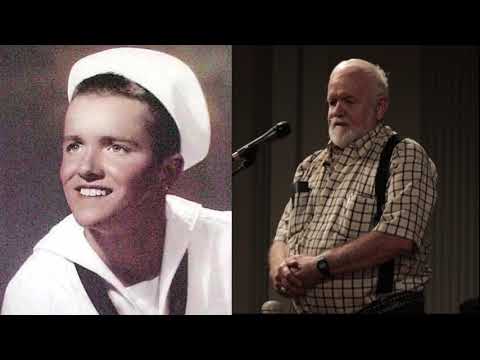
Leave a comment:
-
Re: British Nuclear Testing in Australia
Ghosts of Christmas Past - Part 2
.
BNTVA Media
BNTVA Media

Leave a comment:
-
Re: British Nuclear Testing in Australia
Three more videos to view,
Ghosts of Christmas Past - Part 1
.
BNTVA Media
BNTVA Media

Leave a comment:
-
Re: British Nuclear Testing in Australia
What Does a Nuclear Bomb Explosion Feel Like?
Published on Aug 29, 2018
The existential threat of nuclear war is no longer a Cold War memory. With nine countries armed with around 15,000 atomic bombs up to 53 times stronger than those dropped in the Second World War, the stakes are arguably higher.
Ahead of the International Day against Nuclear Tests on August 29, we met up British atomic veterans who were present at test sites in Australia and the Pacific, to find out what it’s like to experience a nuclear bomb explosion up close.
While most people know about the bombs dropped on Hiroshima and Nagasaki, fewer are aware that an additional 2,000 atomic bombs were detonated after World War II and tested on hundreds of thousands of young soldiers to prepare them for nuclear war.
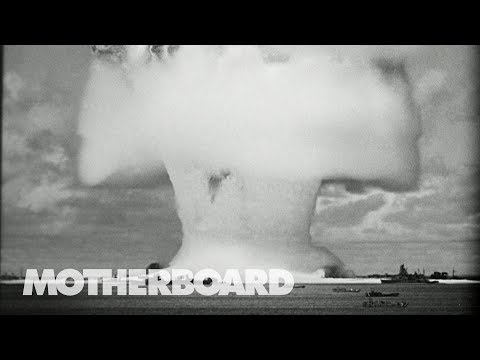
All the comments from video viewers are worth reading.Leave a comment:
-
Re: British Nuclear Testing in Australia
Nuclear test veteran who flew through a mushroom cloud
As soon as the doors on RAF flight navigator Joe Pasquini's plane opened on 28 April 1958 he got out and ran away from the aircraft as quickly as he could.
It was the first time he had ever had to do so. But then, it hadn't exactly been a typical flight.
That morning he and his crew had watched Britain's biggest nuclear bomb explosion. They had then
deliberately flown their plane through the radioactive mushroom cloud it created.
Their job was to measure how successful the explosion had been.
When they got back, they were taken to a decontamination area, where they stripped off, handed in their radioactivity recording equipment and scrubbed themselves in the shower for half an hour.
"After that we all felt like a few beers, and that's exactly what we did," Pasquini says.
It was during the time of the Cold War, and although Britain's status as a world power was starting to fade, in 1947 it took the the decision to join the US and Russia as the third country capable of producing nuclear weapons
In total, Pasquini flew through two mushroom clouds and saw three other nuclear tests from the ground
Then 60 years ago, in October 1952, Britain conducted its first nuclear weapons test, exploding a bomb inside the frigate, HMS Plym.
Others followed, but it was the nine tests - codenamed Grapple X, Y and Z - over the Pacific Ocean between May 1957 and September 1958 that confirmed Britain as a state with a nuclear weapon capable of obliterating entire cities.
The hydrogen bomb that Pasquini and his crew saw that day was Grapple Y which - at three megatons - is still the most powerful nuclear bomb ever tested by the British.
He had no idea what he would be taking part in when he was sitting in a crew room back in England and he got the call to go to Australia to be a part of the 76 Squadron.
"I kicked it around for a few hours and thought, sure, Australia sounds interesting. I gave the guy a call again and said 'what are they doing?' and he said there's a Canberra squadron there and I said 'what do they do?' and he said, 'they do various things - they will tell you what they do when you get there."
I think I saw the face of God for the first time - it was just incredible, it blew our minds”
Joseph Pasquini Former RAF navigator
Radioactive particles
And so it wasn't until he reached Adelaide that Pasquini was briefed about the nuclear bomb tests.
"I didn't like it, but it was too late at that particular time," he says. "This was a kind of experimental situation and basically everyone that was involved in the tests was a guinea pig."
The military personnel involved in the tests were based on Christmas Island, which is a small dot on the map in the middle of the Pacific Ocean.
On the day of the test, Pasquini remembers being woken at about 02:00 in the morning, having breakfast and going to a briefing. He and the rest of his crew were in their aircraft by dawn. The weather was perfect, with only a few puffs of clouds in the sky.
The outside of the aircraft, he says, had been coated in a white wax that was supposed to capture any radioactive particles that could be washed off later.
'Bomb falling'
His crew was one of five ordered to take samples of the bomb after it had exploded.
Flying at 46,000 feet, he says they were excited about what they were about to see.
"We were listening to the bomb aircraft counting down to drop time. As soon as they said 'bomb gone', 'bomb falling', we had to fly away."
They were about 35 miles away from where the bomb was dropped.
"It detonated at 8,000 feet. We had our eyes closed, but even with our eyes closed we could see the light through our eye lids. It took 49 seconds for the light to stop.
"As soon as that happened, we immediately turned back. Fortunately being in the navigating position, I had a little window and I watched the whole thing develop and spread and then start climbing.
"I think I saw the face of God for the first time. It was just incredible, it blew our minds away. These were things that had never been seen before, certainly not by English people."
When the mushroom cloud had passed over them, Pasquini looked up at the window above him and had another surprise - radioactive rain.
"It's the only time I've experienced rain at 46,000 feet," he says.
It was then that the plane's internal measuring equipment maxed out, Pasquini says, exposing them all to high dosages of radioactivity.
He went on to fly through another mushroom cloud during the Grapple Z tests, and saw three other nuclear bomb tests from the ground, having been stopped from flying after receiving more than the recommended dose of radiation.
Feeling of betrayal
Now 79 years old and living in the US, Pasquini has battled cancer seven times.
The Londoner attributes his own illnesses and those of his children to the effects of the radiation exposure, as well as the cancers and illnesses of other nuclear veterans and their children.
The Ministry of Defence says that the cancer rates in the veterans of the nuclear tests are no worse than in normal members of the population, and a group of veterans recently lost claims for compensation at the Supreme Court because their case had been brought to court too late.
About 750 of the veterans and their relatives so far have decided to take their case to the European Court of Human Rights.
Pasquini isn't one of them. The Official Secrets Act had meant that he wasn't able to speak about his experiences to anyone.
But after hearing about the cause of his fellow veterans and their families three years ago, he made contact and gave evidence to help them with their case.
Unlike the British government, the US authorities have paid compensation to their veterans of nuclear testing.
Pasquini feels betrayed that the British government hasn't recognised their sacrifice in the same way.
"We were doing it and we were all ready to die," he says.
https://strangeneews.blogspot.com/20...k1n88ZETc90_-ALeave a comment:
-
Re: British Nuclear Testing in Australia
Maralinga No More: The British Nuclear Bombing of First Nations Lands
As former Australian Conservation Foundation anti-nuclear campaigner David Noonan put it in 2005, “Australia is the only society to have ever provided its own uranium to an overseas nuclear weapons state to make nuclear weapons to then bomb back on their own land.”
And it was Scott Morrison’s pin-up boy, former prime minister Robert Menzies, who in 1950 said yes to the British government carrying out secret nuclear weapons tests without initially consulting cabinet, whilst making assurances that no negative radioactive impact would occur.
Around 800 kilometres northeast of Adelaide, Maralinga was chosen as the main nuclear testing site, as the government found that the Maralinga Tjarutja people – who’d been living there since time immemorial – weren’t actually using the land.
The local Indigenous peoples were never consulted about the testing. Many were forcibly removed from their lands and taken to Yalata mission in SA, which effectively served as a prison camp. Some remained in the vicinity of the test site. Signs written in English were erected warning them to leave.
Indeed, on 27 September 1956, when the first nuclear device, One Tree, was detonated at Maralinga, First Nations peoples had no rights under Commonwealth Law. The vote didn’t come until 1962, while citizenship rights weren’t granted until the 1967 Referendum.
A toxic legacy
The Menzies Liberal government passed the Defence (Special Undertakings) Act 1952, which effectively allowed the British to access remotes parts of Australia to test atomic weapons. The general public for the most part had no awareness or understanding of what would take place.
British and Australian servicemen built a test site, airstrip and township at Maralinga known as Section 400. Australian troops signed documents under Australian secrecy laws that required them never to divulge any operational information, with the threat of harsh prison sentences.
Between September 1956 and October 1957, the British set off seven above ground nuclear bombs ranging from 1 to 27 kilotons. The first four were part of Operation Buffalo, while the last three made up Operation Antler.
Following these tests, the British continued to carry out around 600 minor nuclear warhead tests up until 1963. And it was these that caused the greatest contamination. The most dire being the Vixen B tests that led to massive contamination of plutonium, which has a half-life of over 24,000 years.
The impact upon First Nations
Around 1,200 Aboriginal people were exposed to the radioactive fallout of the tests. This could lead to blindness, skin rashes and fever. It caused the early deaths of entire families. And long-term illnesses such as cancer and lung disease became prevalent amongst these communities.
As for those who were moved away from their homelands, their way of life was destroyed. The Maralinga Tjarutja Land Rights Act was passed by the SA parliament in 1984, which ensured the damaged land was handed back freehold to traditional owners, as soon as it became “safe” again.
The Maralinga Tjarutja people, as well as other First Nations peoples, gradually returned to their homelands. Australia and reluctant British governments carried out initially terribly shonky clean-ups, that got progressively better, of the Maralinga site in 1967, 2000 and 2009.
And the British government eventually paid affected Aboriginal peoples $13.5 million in compensation for the loss and contamination of their lands in 1995.
Prior to Maralinga
The late Yankunytjatjara elder Yami Lester was just a boy living at Walatinna in the South Australian outback, when at 7 am on 15 October 1953, the British detonated a nuclear bomb at a test site at Emu Fields, northeast of Maralinga.
Mr Lester watched as a long, black cloud of smoke stretched out from the bomb site towards his homelands. In the wake of two tests carried out at Emu Fields within 12 days of each other, Yemi permanently lost his site, sudden deaths occurred, and his people suffered long-term illnesses.
The Emu Fields blasts were not the first on Australian soils. The initial nuclear bomb blast was carried out on the Monte Bello Islands in October 1952, while two more blasts took place in this Indian Ocean region in 1956.
And just like the Maralinga and Emu Fields blasts, the radioactive waste from these islands travelled across the entire continent. Two hotspots of excessive radioactive fallout resulting from the Emu Fields blasts were the NSW towns of Lismore and Dubbo.
Adding insult to injury
In 1989, the federal government announced it was establishing a nuclear waste dump near Coober Pedy in SA on the lands the Kupa Piti Kungka Tjuta, a senior women’s council representing the local peoples, many of whom had directly suffered the impacts of British nuclear testing.
As opposition to the dump grew, the government used the provisions of the Land Acquisition Act 1989 to seize the land, where it proposed to store the waste that was being produced at Sydney’s Lucas Heights reactor.
In July 2004, after a six year long battle the Kungka Tjuta senior women brought a stop the nuclear waste repository being situated on their land. And the federal government then turned to the NT’s Muckaty Station to dump the NSW waste. However, after that fell through, it’s still looking for a site.
The global threat continues
Maralinga took place at the height of the Cold War, after the US government refused to continue its nuclear program with British participation. And following World War Two, the crumbling empire sought to develop its own nuclear capacities in its faraway colonial backyard.
But, while many believe the threat of nuclear war faded with the end of the Cold War, renowned political analyst Noam Chomsky still warns that the two major threats in the world today are climate change and nuclear war.
Chomsky has pointed to a March 2007 article published in the Bulletin of the Atomic Sciences that revealed the “extremely dangerous” threat the Trump administration’s nuclear forces modernisation program is creating.
And as of January this year, the Doomsday Clock – which measures the likelihood of human-made global catastrophe – is still set at two minutes to midnight, as it first was 12 months prior. Based on the two threats identified by Chomsky, this setting is the closest to midnight it’s been since 1953.
https://www.sydneycriminallawyers.co...nations-lands/Leave a comment:
-
Re: British Nuclear Testing in Australia
Benchmarks: August 27, 1958: Operation Argus creates first anthropogenic space weather
Sixty years ago this month, a fleet of nine U.S. Navy ships with 4,500 people aboard maneuvered into the Atlantic. Eight of these ships continued to the South Atlantic, about 1,800 kilometers southwest of Cape Town, South Africa, while the ninth headed to the North Atlantic, near the Azores. The clandestine military operation — code-named Operation Argus — was not an invasion, but a scientific mission, carried out at a staggering pace and inspired by an unpublished research paper by an elevator engineer with an interest in accelerator physics.
Secrecy was critical considering the nature of the mission: detonating multiple low-yield nuclear weapons high in the atmosphere to study the explosions’ effects on Earth’s magnetosphere. The task force launched three 1.7-kiloton bombs — one each on Aug. 27, Aug. 30 and Sept. 6, 1958 — detonating them, respectively, at altitudes of 200, 240 and 540 kilometers. The experiments marked the first time that humans altered space weather.
The article once again is quite extensive, but interesting.......................especially in regards to climatic changes and the effects of Nuclear Testing
It may be all read at the link https://www.earthmagazine.org/articl...Xd8b9AKQIAaF84Leave a comment:
Leave a comment: